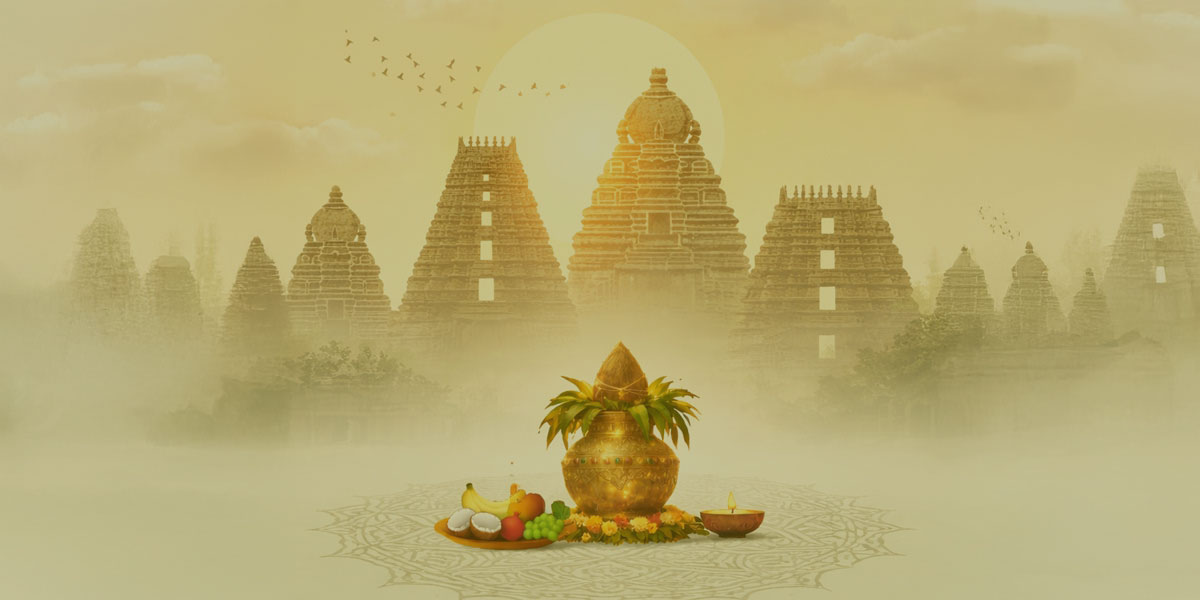
The name Yugadi or Ugadi is derived from the Sanskrit words yuga (age) and ādi (beginning): “the beginning of a new age”. It falls on “Chaitra Shudhdha Paadyami” or the first day of the bright half of the Vedic month of Chaitra.
This year it falls on March 19/20. For local timings download the align27 app.
According to the vedic calendar, each year is named after a specific Samvatsara (A “Samvatsara” is a Sanskrit word for year) which is presided over by a particular deity. The Samvatsara is calculated based on the position of the moon and the sun in the sky. The cycle of Samvatsaras repeats every 60 years, with each year having a different name and a different ruling deity.
In the traditional 60-year cycle of the Hindu calendar, each year is called a Samvatsara, and every year carries a unique name and meaning.
The upcoming year is called Parābhava Samvatsara.
The word Parabhava comes from Sanskrit.
Together, Parābhava can be understood as a period where external forces challenge us and push us toward transformation and growth.
This does not necessarily mean defeat. In a deeper spiritual sense, Parābhava represents the breaking of ego and illusions, allowing wisdom and maturity to emerge.
The year of Parābhava often encourages people and societies to:
In many ways, such years become turning points, where challenges lead to greater awareness and long-term growth.
Spiritually, Parābhava reminds us that true strength comes not from domination, but from humility, wisdom, and alignment with dharma.So while the year may bring moments of pressure or testing, it ultimately guides individuals and societies toward deeper transformation and spiritual evolution.
Wish you all a very Happy Ugadi 🙏

On Ugadi, meditate and set clear sankalpas (intentions). Use the powerful energies of the day to plant seeds of abundance, health, and inner peace.
No Comments
Leave a comment Cancel